India After Gandhi by Ramachandra Guha
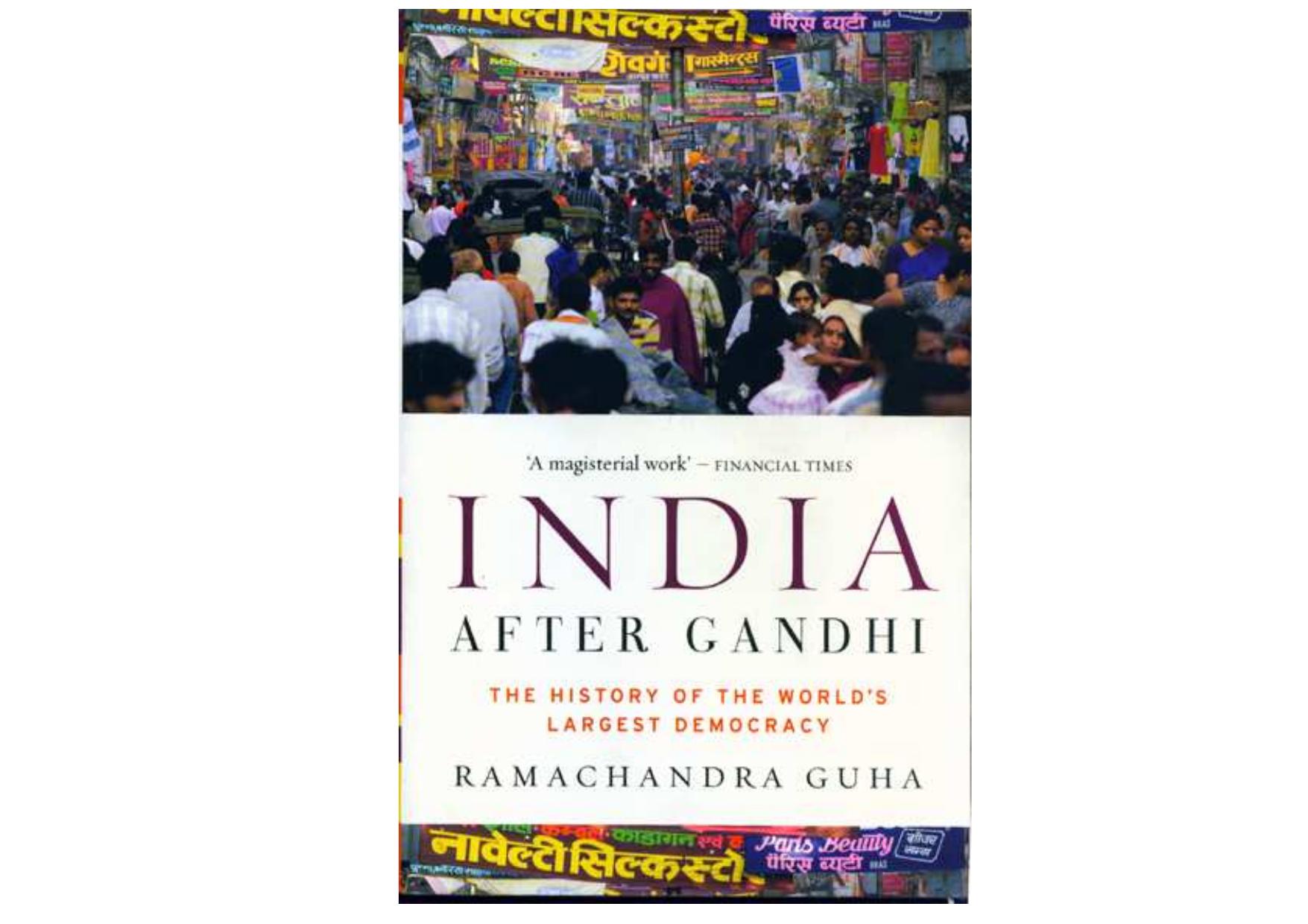
Author:Ramachandra Guha [Guha, Ramachandra]
Language: eng
Format: epub, pdf
Tags: History, Asia, General, General Fiction
ISBN: 9780330540209
Google: 8FKepYC6wzwC
Amazon: 0060958588
Publisher: Pan Macmillan
Published: 2008-08-11T16:00:00+00:00
III
On the social front, one indicator of India’s distinction was that it had a woman prime minister. What, however, of Indian women in general? While Mrs Gandhi was winning elections and a war, the Indian Council of Social Science Research (ICSSR) had commissioned seventy-five separate studies on the status of women – with regard to the law, the economy, employment, education, health, and so forth.15 The results were not altogether uplifting. In many ways, the processes of modernization promoted since Independence had increased the gender divide. For instance it was chiefly men who had taken advantage of the improvement in health facilities. This aggravated the sex ratio, which, in 1971, stood at 931 women for 1,000 men. Again, the proportion of women in the industrial labour force had declined, from 31.53 per cent in 1961 to 17.35 per cent in 1971. Factories had once recruited couples, but technical improvements had rendered redundant unskilled jobs previously undertaken by women.
The vast majority of women laboured away in the countryside. Among families of peasant cultivators there were 50 women workers to every 100 male ones; among families that owned no land this figure rose to 78. The most hazardous operations were often the preserve of women, such as the transplantation of rice, which left them vulnerable to intestinal and parasitical infections. To these hazards were added the burdens of child-rearing and fuel and fodder collection, tasks reserved for women and girls alone.16
The literacy rate was dismal in general and dire for women: 39.5 per cent of males could read and write in 1971, but only 18.4 per cent of females. A mere 4 percent of women in rural Bihar were literate. The poverty in states such as Bihar and Orissa had led to the mass migration of males in search of work, placing even greater burden son the women.
The ICSSR reported that ‘what is possible for women in theory, is seldom within their reach in fact’. Their studies indicated ‘that society has failed to frame new norms and institutions to enable women to fulfil the multiple roles expected of them in India today. The majority do not enjoy the rights and the opportunities guaranteed by the Constitution. Increasing dowry and other phenomena, which lower women’s status further, indicate a regression from the norms developed during the Freedom Movement’.
Download
This site does not store any files on its server. We only index and link to content provided by other sites. Please contact the content providers to delete copyright contents if any and email us, we'll remove relevant links or contents immediately.
| Africa | Americas |
| Arctic & Antarctica | Asia |
| Australia & Oceania | Europe |
| Middle East | Russia |
| United States | World |
| Ancient Civilizations | Military |
| Historical Study & Educational Resources |
The Sympathizer by Viet Thanh Nguyen(4445)
The Rape of Nanking by Iris Chang(4256)
World without end by Ken Follett(3512)
Ants Among Elephants by Sujatha Gidla(3494)
Blood and Sand by Alex Von Tunzelmann(3240)
Japanese Design by Patricia J. Graham(3213)
The Queen of Nothing by Holly Black(2658)
City of Djinns: a year in Delhi by William Dalrymple(2580)
India's Ancient Past by R.S. Sharma(2493)
Foreign Devils on the Silk Road: The Search for the Lost Treasures of Central Asia by Peter Hopkirk(2482)
Tokyo by Rob Goss(2463)
Inglorious Empire by Shashi Tharoor(2462)
In Order to Live: A North Korean Girl's Journey to Freedom by Yeonmi Park(2409)
Tokyo Geek's Guide: Manga, Anime, Gaming, Cosplay, Toys, Idols & More - The Ultimate Guide to Japan's Otaku Culture by Simone Gianni(2400)
India's biggest cover-up by Dhar Anuj(2381)
The Great Game: On Secret Service in High Asia by Peter Hopkirk(2371)
Goodbye Madame Butterfly(2283)
Batik by Rudolf Smend(2210)
Living Silence in Burma by Christina Fink(2093)
